
 India
India Uzbekistan

Why patients from Uzbekistan travel abroad for treatment
Patients from Uzbekistan travel abroad for medical treatment primarily because certain advanced procedures — complex cardiac surgery, organ transplants, precision cancer therapies, and specialised orthopaedic interventions — have limited availability within the country. Capacity constraints at specialist centres can also mean patients face extended waits for consultations or procedures that require immediate attention. For conditions where timing and technical expertise are critical, travelling to a country with broader infrastructure simply becomes the practical choice.
India has become a preferred destination for many of those patients. Its hospitals offer a wide range of tertiary and quaternary-level care under internationally trained specialists, often at a fraction of what comparable treatment would cost in Europe, the Gulf, or South-East Asia. The geographic proximity between Uzbekistan and India, manageable flight connections from Tashkent, and the availability of Russian-speaking coordinators at many Indian facilities make the journey considerably less daunting than travelling to more distant medical destinations. For patients weighing their options carefully, India offers a practical combination of clinical depth, affordability, and logistical accessibility.
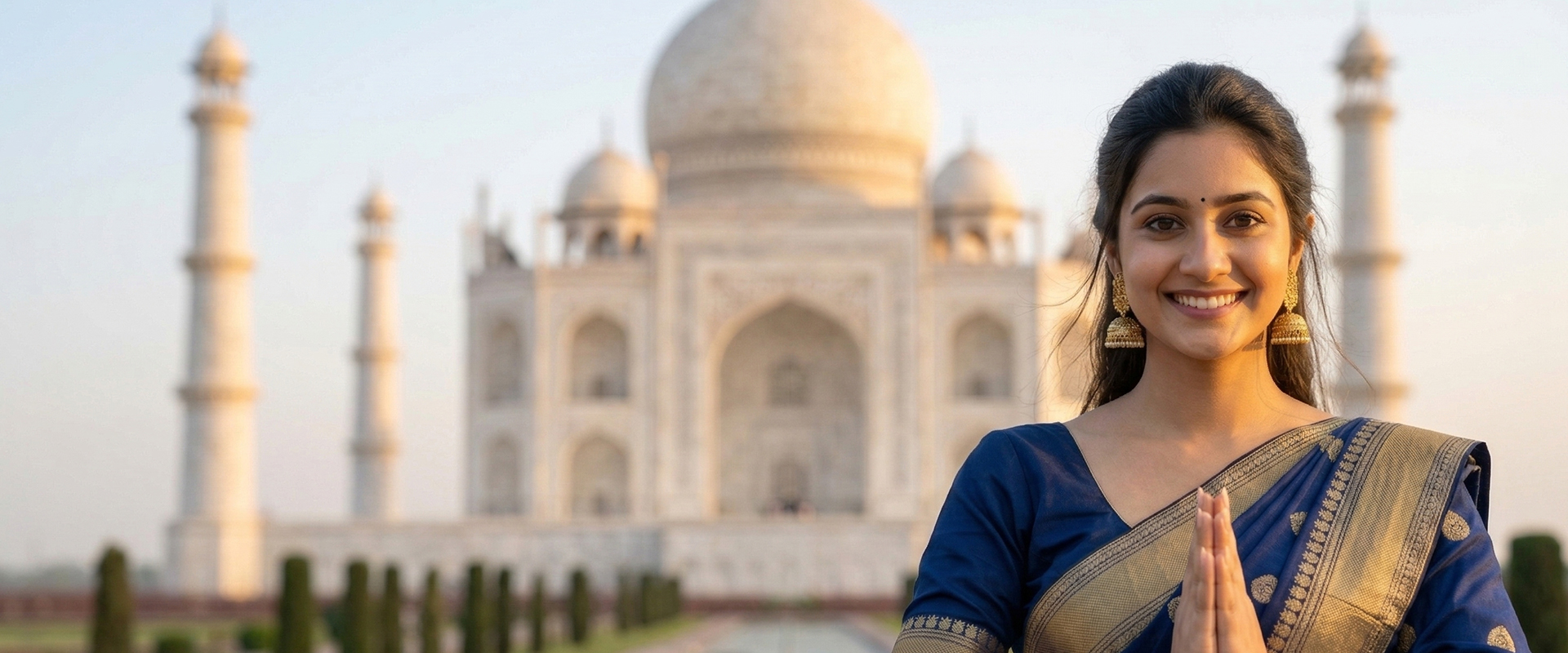
India is increasingly being trusted for medical care
India & Uzbekistan: a friendship that extends to healthcare
India and Uzbekistan have maintained a Strategic Partnership since 2011, with health and people ties forming a warm core of the relationship. Under India's grant assistance, two High Impact Community Development Projects were signed in December 2021 at a cost of approximately USD 2.5 million. India has conducted e-ITEC (Indian Technical and Economic Cooperation) capacity-building programmes specifically for Uzbekistan's medical professionals, and since 1993 more than 2,400 Uzbek professionals have been trained across diverse fields in India — with annual ITEC slots raised to 150. In June 2026, a senior Uzbek delegation from the Agency for the Development of the Medical and Pharmaceutical Industry visited India, meeting institutions including Dr. Reddy's Laboratories and AIG Hospitals, and agreeing to expand cooperation in clinical management and affordable medical equipment. Indian pharmaceutical companies have already invested in manufacturing facilities inside Uzbekistan and continue to supply cost-effective medicines to Uzbek healthcare markets.
The people-to-people dimension is equally striking: an estimated 21,000 Indians live in Uzbekistan, of whom approximately 16,000 are medical students enrolled in government universities — a mutual educational immersion that runs in both directions. The first-ever India–Uzbekistan Consular Dialogue, held in Tashkent in July 2025, explicitly addressed the interests of medical travellers between the two countries. For an Uzbek patient considering treatment in India, this institutional familiarity matters: Indian hospitals, doctors, pharmaceutical brands, and even university campuses are already well-known quantities in Uzbekistan, making India a reassuringly familiar — not foreign — destination for specialised care.
Sources: India–Uzbekistan Bilateral Brief, Ministry of External Affairs, Government of India (August 2025); Embassy of India, Tashkent — Bilateral Relations & Indian Community pages (updated July 2025 / January 2026); dakshin.org.in — Embassy of India, Tashkent country page; Azertag/UZA.uz report on Uzbekistan–India healthcare delegation (June 2026); ITEC Activities page, Embassy of India, Tashkent.
Specialties for which patients generally travel to India
Heart treatment leads the corridor — across Cardiac Surgery and Cardiology, patients from Uzbekistan most often travel for Coronary Angioplasty & Stenting, Coronary Artery Bypass Grafting (CABG), Heart Transplant Surgery, Heart Valve Replacement Surgery and TAVI / TAVR.
Fertility & women's health (Infertility & IVF) is also among the care patients from Uzbekistan commonly seek in India.
Many patients also come for Cancer care — Medical Oncology — particularly Cancer Immunotherapy, CAR-T Cell Therapy, Chemotherapy for Cancer and Targeted Therapy for Cancer.
Brain, spine & nerve care completes the picture across Neurosurgery, most commonly for Brain Tumor Surgery.
Bone & joint care is another major draw: Orthopedics, with Hip Replacement and Knee Replacement Surgery among the most sought treatments.
Popular Hospitals for Uzbekistan patients in India
Accredited partner hospitals — specialties, doctors, facilities and accreditations. →
Medical visa from Uzbekistan to India
Visa requirements for Uzbek travellers are set by the Government of India and change from time to time. Rather than publish a procedure that may be out of date, we point you to the official source and confirm your position with you personally.
Check the official Indian government portal: indianvisaonline.gov.in — it is the only authorised site, and no third party can issue an Indian visa on your behalf.
Tell us you are travelling from Uzbekistan and we will confirm what applies to you, what documents you need and what it costs — usually the same day you ask. Whichever route applies, we arrange the hospital invitation letter free of charge and guide you through the paperwork.
What to bring
- Medical reports & scans — all recent reports, imaging (on disc or drive), prescriptions and discharge summaries, ideally also as digital copies;
- Passport & photos — valid at least 6 months beyond arrival, plus a few passport-size photographs;
- Current medicines — in original packaging, with the prescriptions that cover them;
- A letter from your local doctor — diagnosis and treatment history, if available;
- Payment — an internationally enabled card and/or US dollars; hospitals accept both, and our team advises on the best way to pay;
- Comfortable clothing — loose, layered clothes for hospital stays and recovery;
- Travel documents & hospital papers — your passport, any visa or entry documents that apply to your nationality, and the hospital invitation letter;
- Your companion's documents — passport, photographs and their own travel documents.
Getting to India from Uzbekistan
Most patients from Uzbekistan depart through Tashkent International Airport (TAS), the country's primary international hub, which offers the broadest range of connections to India. Travellers from Samarkand, Bukhara, and Namangan typically make their way to Tashkent before departure. Direct or single-stop flights connect Tashkent to major Indian medical hubs including Delhi, Mumbai, and Chennai, with journey times of approximately 3 to 5 hours depending on the destination and routing. Upon arrival, Ginger Healthcare coordinates airport transfers and ensures a representative is available to receive patients — an important reassurance after a long journey undertaken for medical reasons.
Live prices from real airline searches — compare dates, airlines and stopovers before you budget. Opens in a new tab. See routes & fares →
Planning the cost of treatment in India
Planning a medical trip abroad involves more than the treatment itself. Understanding every layer of expenditure from the outset helps families budget realistically and travel with confidence rather than uncertainty.
- Treatment cost: Varies with the diagnosis, the complexity of the procedure, the hospital chosen, and the treating doctor's seniority.
- Visa fees: Whatever visa applies to your nationality carries a government fee, plus a small bank processing charge. We confirm the current route and fee with you before you apply — see the visa section below.
Having a realistic consolidated figure before departure removes the risk of unwelcome financial surprises far from home. That is precisely why Ginger Healthcare built a first-of-its-kind Medical Tourism Cost Calculator — a tool that generates a tentative estimate of the complete cost, covering treatment, visa, travel fare and stay, in one place. Dedicated counsellors are available around the clock to walk through any questions the estimate raises.
| Procedure | Indicative cost (USD) |
|---|---|
| Brain Tumor Surgery | $4,000 - $11,000 |
| Chemotherapy for Cancer | $500 - $2,000 |
| Coronary Angioplasty & Stenting | $4,500 - $7,000 |
| Coronary Artery Bypass Grafting (CABG) | $3,500 - $7,000 |
| Heart Valve Replacement Surgery | $5,000 - $9,000 |
| Hip Replacement | $5,500 - $9,500 |
| Knee Replacement Surgery | $5,000 - $14,000 |
Indicative ranges for international patients — each procedure links to its detailed page. The final estimate depends on your medical reports, the hospital and the doctor.
🧮 Medical Tourism Cost CalculatorTreatment + visa + travel fare + stay — one tentative estimate, free. Estimate now →
Frequently asked questions — Uzbekistan
How much does it cost overall to travel from Uzbekistan to India for treatment?
The total cost depends on the procedure, the hospital, how long you stay, and your accommodation choice. As a rough guide, economy return airfares from Tashkent run $300–$500, accommodation near hospitals starts at around $25 per night, and daily living expenses average about $15 per person. Use the Medical Tourism Cost Calculator on this site for a consolidated estimate tailored to your situation.
Will there be language support when I arrive in India?
Most major hospitals that receive international patients have dedicated international patient departments with multilingual coordinators. Ginger Healthcare also provides support throughout the process, and Russian- and Uzbek-speaking interpreters are available through Ginger Healthcare's coordination to ensure communication is as clear as possible.
Google Reviews
What patients say about treatment in India & experience with us
 Shirin Nazarova
“Good day! This team is truly wonderful, and I am so grateful for all their help and support. I would highly recommend them to everyone! I would especially like to mention the lovely Faizan Jalali, Dolma, and Natasha. They have helped us so much and always took the time to find answers to all our questions. They were incredibly helpful, kind, patient, and caring. Whenever we had a problem, they were always there to help, and everything was resolved within just a few minutes. Their kindness and professionalism made a difficult situation much easier for us. Thank you so much for everything you have done for us. We truly appreciate your support and care. And most importantly, I hope you will always stay healthy and happy and that you will never have to deal with health problems yourselves. Please always take good care of yourselves! We are very grateful to you all. Thank you from the bottom of our hearts! ❤️ All of my family grateful, mom happy and healthy!”